Why Closing the AI Gender Gap Matters: Mara Bolis on Fierce Ambivalence and Women Leading with AI
Mara Bolis, our expert facilitator on Activate AI and AwakenHub collaborator across WeScale, SheGen and the wider AwakenHub community, has just been featured in Fortune highlighting the risk of a “two-tier AI economy” if women are left out of AI adoption. In the article, she points to a stark reality: women’s jobs are three times more likely to be automated by AI, yet women are using AI at a rate around 25% lower than men on average, often because they are more attuned to the risks, ethics and real-world impacts of the technology.
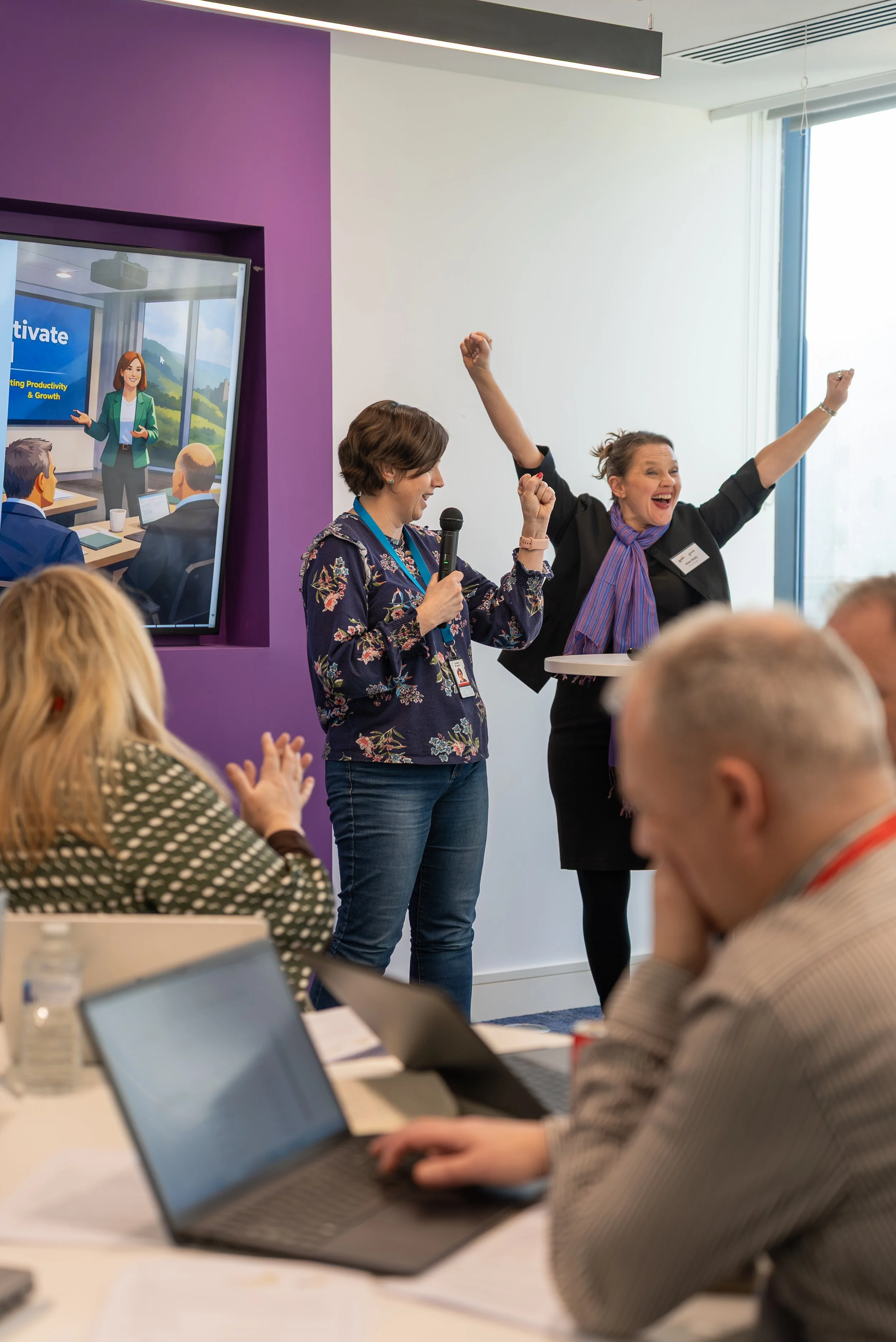
Mara argues this isn’t about a lack of competence, but about discernment, and calls for “fierce ambivalence”: using AI to empower ourselves while holding builders and policymakers to the highest standards so AI is rolled out safely and equitably. That perspective sits at the heart of her work with AwakenHub, where she’s been helping women founders move from AI‑curious to AI‑confident through practical sessions like Unlocking Your Productivity with AI and Maras fireside chat with Clare McGee in Dublin Why Fierce Ambivalence Is the Leadership Skill of the AI Era.
If you care about women’s economic power in an AI-shaped future, Mara’s opinion piece is a must‑read. Start with the Fortune article for the big-picture stakes, then dive into our recent blogs to see how women founders here are already putting these ideas into practice in their own businesses.
Read Jacqueline Munis full Fortune article Women are avoiding the very technology that threatens them most, as expert warns of a ‘two-tiered AI economy’ approaching featuring Mara Bolison the AI gender gap and what it will take to avoid a two‑tier AI economy.” Full article available here.
What Mara is working on now
Mara’s thought leadership in the article builds on a growing body of work where she’s sounding the alarm on the AI gender gap, and offering practical ways to close it. In her Stanford Social Innovation Review piece, The AI Gender Gap Paradox, she unpacks global research showing women have lower odds of using generative AI than men, especially in older age groups, and explains why that hesitation is rooted in risk awareness, not a lack of ability. She warns that if women disengage from AI, productivity gains and promotion opportunities will skew even more heavily towards men, and organisations will miss the perspectives needed to keep AI safe, fair and competitive. Dig into the insights in Maras SSIR article here.
Fellow of The Berkman Klein Center for Internet & Society at Harvard University
Alongside her writing, Mara has just joined Harvard's Berkman Klein Center as a Spring 2026 Fellow, researching how generative AI is reshaping women's lives. The new cohort of fellows joins current BKC fellows, progressing the Center’s AI research agenda. Mara focuses on the gender dynamics of AI adoption and develops her “fierce ambivalence” framework, a call for women to use AI on their own terms while demanding higher standards from the systems changing our work and lives.
Mara Bolis’s Fierce Ambivalence framework is about holding two truths at once: we should absolutely use AI to empower ourselves and our organisations, and we should be equally relentless in demanding transparency, fairness and safety from the people building and governing these tools. Rather than seeing women’s hesitation around AI as “risk aversion,” she reframes it as informed risk awareness, a clear-eyed reading of bias, privacy concerns and unreliable outputs that many early adopters gloss over.
In practice, Fierce Ambivalence calls on women to stay in the AI conversation, use the tools to move their work forward, and at the same time push for better standards, oversight and design so AI works for everyone, not just a narrow group. It is both a leadership stance and a call to action: don’t opt out of AI, but don’t switch off your critical instincts either.
Womansplaining AI: The AI conversation you're not getting anywhere else.
She’s also co‑host of the Womansplaining AI podcast, where she and Logan Currie have created a new space for non‑technical women who are curious about AI but unsure where to start, breaking down big questions about AI research, risk and real-world impact in plain language. The podcast features voices from women around the world, from a nonprofit founder explaining RAG systems to a PhD economist in Ottawa and an advocate in Australia talking about reproductive justice and accessibility, woven into the episode “On Women, AI and Who Gets a Seat.”. In the latest Womansplaining AI episode, led by Logan Currie, “AI Tells Boys to Be Entrepreneurs and Girls to Be Influencers”, they digs into a study of nearly 10,000 AI responses showing how large language models nudge boys toward entrepreneurship while steering girls toward image-based careers.
Listen to the Womensplaining AI Podcast here.
Make it stand out
Join Maras Fierce ambivalence movement
If you’d like to go deeper into Mara’s thinking, start by reading The AI Gender Gap Paradox in Stanford Social Innovation Review and exploring her Womansplaining AI episodes linked below.
More from Mara Bolis
The AI Gender Gap Paradox – Mara’s Stanford Social Innovation Review article introducing the “fierce ambivalence” framework and why women’s AI hesitation is actually informed risk awareness, not a deficit. Read it here.
We’re at Risk of a Two-Tier AI Economy if We Don’t Bridge the AI Gender Gap – Fortune opinion piece featuring Mara on why women’s lower AI use could worsen inequality if we don’t act now. Read it here.
Womansplaining AI Podcast – Mara’s podcast for non‑technical women who are curious about AI, breaking down big questions about jobs, gender and the future of work with no jargon and no gatekeeping. Listen here.
Follow Mara Bolis on LinkedIn
AwakenHub would like to extend our heartfelt thanks to Mara Bolis for her generous partnership, sharp insight and constant advocacy for women at the frontlines of AI adoption. Through her workshops, writing and thought leadership, she’s helped our founders move from AI‑curious to AI‑confident, while never losing sight of safety, equity and women’s economic power. We’re deeply grateful for the time, care and energy she has invested in the AwakenHub community and look forward to continuing this important work together.